
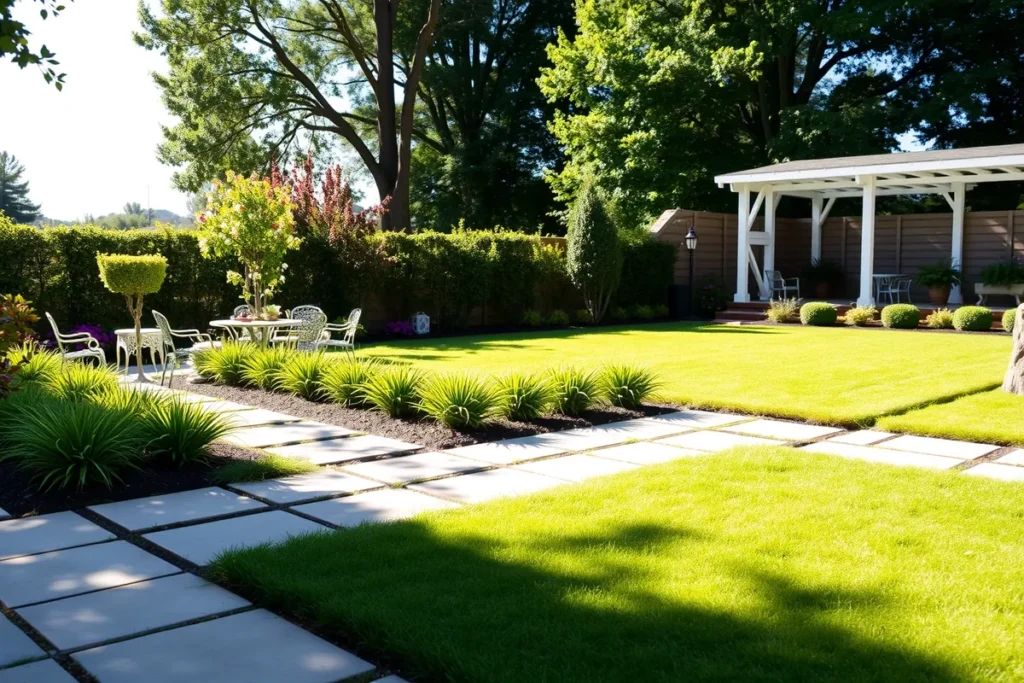
The best keywords for landscapers name the service and location, such as “block paving [town]”. Group them by service and area, and match each to a dedicated service page. We go further into this in Google Ads for Landscapers.
- Service + location terms convert.
- Group by service and area.
- Match each to a service page.
The best keywords for a landscaper name the specific service and the location, such as “driveway installer [town]” or “garden landscaping near me”, because homeowners search for the work they want, not for “landscaper” alone. Targeting these service-plus-location terms brings ready, project-led enquiries. This guide covers the keyword types that matter, how to group them, and how to match them to pages, building on local keyword research.
What Keyword Types Matter for Landscapers?
Service-specific terms with local intent. Keywords combining a specific service and a location carry the most value, ahead of the broad “landscaper” term. “Block paving [town]” or “artificial grass installer near me” signal a homeowner with a defined project. These convert better than generic “landscaper near me”, because the searcher knows the service they want and is choosing a specialist for it. Driveways, patios, fencing, and turfing each have their own valuable terms. The mechanics behind this are set out in How to Structure a Multi-Service Website.
How Do You Group Landscaper Keywords?
Group them by service and area. Organise keywords into clusters for each service and each area, so every cluster has a dedicated page. One cluster for driveways, one for patios, one for garden landscaping, and so on, combined with the towns you serve. This stops pages competing and ensures every important service search has a page built to rank for it, supported by your service and area pages. For the method on its own terms, read How the Google Map Pack Works and How to Rank in the Top 3.
How Do You Match Keywords to Pages?
Each service gets its own page. Match each service-plus-location keyword to a dedicated service page, and use design and cost guides to support them. “Driveway installer [town]” belongs on a driveways page; a question like “how much does block paving cost” belongs in a cost guide that supports it. One focused page per service ranks far better than a single combined page, and the supporting content captures research searches and builds authority.
Building a Keyword Strategy
Target real intent
Use the words customers actually search, with clear local and buying intent.
Map terms to pages
Give each service and area its own page so it can rank.
Track what converts
Follow keywords through to jobs and double down on the winners.
What Makes a Good Keyword for Landscapers?
A good landscaper keyword signals a homeowner planning a specific exterior project locally. Phrases combining the service and location, such as “driveway installation [town]” or “garden landscaping [town]”, show clear intent and are worth targeting because the searcher is planning a real project. Service-specific local terms concentrate effort on the searches most likely to become work.
The best keywords also reflect how homeowners actually describe their projects, which may differ from trade terms. Capturing both formal names and everyday phrasing widens your reach. For landscapers, focusing on keywords that combine a specific service with local intent, and recognising the seasonal patterns in how people search, concentrates effort on the searches most likely to become valuable, well-timed landscaping projects. The practical steps are in Local SEO for Landscapers.
How Do You Find the Words Landscaping Customers Use?
Real searcher language is the best source. Use Google autocomplete, “people also ask” boxes, and related searches to see how homeowners phrase landscaping queries, and read the search terms in your Google Business Profile insights. Note the descriptions customers use when they enquire, since these reveal the words and concerns behind their searches.
- Competitor pages that rank well also show which terms Google rewards locally.
- Combining autocomplete, your own enquiry data, customer language, and competitor research builds a grounded keyword list.
- For landscapers, capturing the service-specific, design-led, and cost-related phrases homeowners genuinely use, along with seasonal variations, ensures your content matches real demand rather than assumptions about how people search for exterior work.
How Do You Target Different Landscaping Services?
Landscapers offer varied services, driveways, patios, fencing, garden design, turfing, and each deserves its own keyword focus and dedicated page. Grouping keywords by service, then by intent within each, lets every service rank for its own searches rather than diluting the site across a generic page that ranks for none of them well.
Each service page targets that service’s terms and shows relevant transformations, matching both search and homeowner expectation. Combining service and location, so “[service] [town]” has a home, captures the local searches. For landscapers, a deliberate keyword approach giving each service its own optimised page is what lets you appear across the full range of service searches while keeping each page relevant and visually convincing for that specific work.
How Do Cost and Design Keywords Fit In?
Cost and design are central to landscaping decisions, so both keyword types carry high value. Cost searches like “how much does a driveway cost” attract serious planners, while design searches like “garden design ideas” attract homeowners gathering inspiration. Content answering each, with honest cost guidance and inspiring design ideas, captures researching homeowners and builds trust.
Cost content positions you as transparent; design content positions you as the creative expert. Both funnel readers toward your service pages when they are ready. For landscapers, treating cost and design keywords as opportunities, rather than neglecting them, captures large segments of homeowners, those budgeting and those dreaming, at the research stage, building the relationship that leads to an enquiry when they decide to proceed.
How Do You Map Landscaper Keywords to Pages?
Group keywords by service and intent, then give each cluster a dedicated page. A page for “driveways”, one for “driveway cost”, and a guide for design ideas each target their own intent without competing. Combining service and location, so “[service] [town]” has a home, captures the local buying searches.
- Link these pages under a clear structure, with cost and design content funnelling readers to the service pages where they can enquire.
- This prevents pages cannibalising each other and gives search engines one clear, relevant page per search.
- For landscapers, a deliberate keyword-to-page map turns a list of terms into a site that ranks across the full range of services and the design, cost, and buying stages of the landscaping journey.
What Long-Tail Keywords Are Worth Targeting?
Long-tail keywords, the longer, more specific phrases, are valuable for landscapers because they carry clear intent and less competition. A phrase like “resin bound driveway installer [town]” has fewer competitors and a more committed searcher than the broad “landscaper [town]”. The specificity means the homeowner knows what they want and is closer to commissioning.
Targeting many specific service, material, and area phrases together brings more qualified traffic than chasing one broad term you may never rank for. For newer or smaller landscapers, long-tail focus is the practical route to ranking, because you compete for terms larger rivals overlook. Building pages and content around these specific searches captures high-intent homeowners efficiently and cost-effectively.
Which Keywords Should Landscapers Avoid?
Avoid terms too broad to rank for, those with no buying or local intent, and pure DIY searches that attract people who will not hire a landscaper. Single words like “garden” are dominated by large sites and rarely convert locally. Searches like “how to lay a patio yourself” bring readers, not customers, and belong in supporting content rather than service pages.
Focus your service and area pages on the buying-stage, service-specific, location-led searches that signal a ready homeowner. Research and DIY terms can play a supporting role in guides that funnel readers toward your services, but should not be the priority. For landscapers, concentrating on high-intent local service terms rather than broad or DIY ones directs effort to the searches that actually produce valuable, signed landscaping work.
How Do Seasonal Keywords Affect Strategy?
Landscaping searches surge seasonally, so timing your keyword strategy around the peaks matters. Spring and summer drive most demand for many services, so content targeting those searches must be ranking before the surge, which means building it months ahead. Some services have their own seasonal patterns worth tracking and targeting at the right time.
- Recognising the seasonal rhythm lets you publish and optimise content ahead of demand and time promotions to match.
- For landscapers, the seasonal nature of search is both a challenge and an opportunity: those who prepare their content to rank before the peak capture the surge, while those who react late miss it.
- Aligning your keyword strategy to the seasonal calendar is therefore essential to maximising landscaping enquiries.
Last Thoughts on Landscaper Keywords
The keywords worth targeting are the service-plus-location terms homeowners actually use, grouped by service and area and matched to dedicated service pages. Chasing the generic “landscaper” term wastes effort against broad competition; targeting specific services wins project-led enquiries. Map the keywords, then build the pages to match.
- Service-plus-location keywords carry the most value.
- They beat the generic “landscaper” term.
- Group keywords by service and area.
- Match each cluster to a dedicated service page.
- Use design and cost guides to support them.
Frequently Asked Questions (FAQs)
What are the best keywords for a landscaper?
Service-plus-location terms such as “block paving [town]” or “garden landscaping near me”, which signal a defined project.
Should I target the term “landscaper”?
It is broad and competitive. Service-specific terms convert better and are easier to rank for.
How many keywords should I target?
As many as you have genuine services and areas to support with pages. Each cluster needs its own page.
Do cost keywords help?
Yes, as supporting content. Cost and design guides capture research searches and link through to your service pages.
How do I group landscaper keywords?
By service and area, so each cluster maps to a dedicated service or area page.
Should keywords include the area?
Yes. Combining service and area helps you rank for local searches and match homeowner intent.
Can one page target several service keywords?
Closely related ones, yes. But distinct services should each have their own page to rank well.
How do I find landscaper keywords?
Use keyword tools and autocomplete around your services plus locations, and the questions homeowners ask.
Do driveways and gardens need separate keywords?
Yes. They are distinct services with distinct searches, so each needs its own keywords and page.
How long until landscaper keywords rank?
Usually a few months, depending on competition and the strength of the service pages and your overall site.