
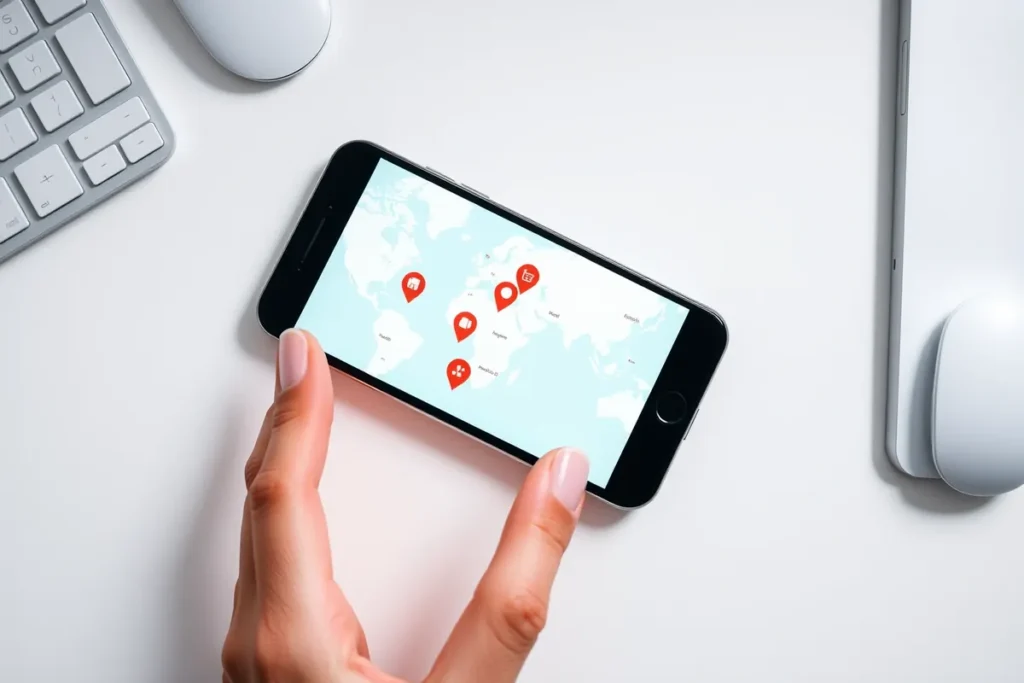
The Google Map Pack is the block of three local businesses Google shows with a map for local-intent searches, and you rank in it by improving proximity, relevance, and prominence.
- Powered by the Google Business Profile, not the website alone.
- Where it sits: above the organic results, and it dominates the mobile screen.
- Top 3 only: everyone else competes in the organic listings below.
The Google Map Pack is the set of three local listings, shown with a map, that Google places at the top of a local search. For a home service business it is the highest-value position in local search, because the local 3-pack captures most of the clicks for “near me” and service-plus-town queries. This guide explains what the Map Pack is, how Google ranks it, the ranking-factor checklist, a step plan to get into the top three, and why some businesses are left out. If you are new to the wider topic, start with what local SEO is.
What Is the Google Map Pack?
The Google Map Pack is the block of three business listings displayed with a map for searches that carry local intent. It is also called the Local Pack or the 3-pack. It sits above the standard organic results and takes up most of the first screen on mobile. We go further into this in SEO vs Google Ads for Home-Services Lead Generation.
The Map Pack is powered by the Google Business Profile rather than the website alone. Google reads the profile, the reviews, and supporting signals to decide which three businesses to show and in what order. The website still matters for relevance, but the profile is the engine.
How Does Google Rank the Map Pack?
Google ranks the Map Pack on three factors: proximity, relevance, and prominence. The three combine into the order a searcher sees, and a gap in one factor lets a competitor take the spot. For the method on its own terms, read Local SEO for Cleaning Companies.
Proximity
How close the searcher is at the moment of the search. Proximity cannot be faked, but a service-area business can rank across several towns with the correct service-area setup.
Relevance
How well the profile and website match the query, driven by the primary category, the service list, and on-page content. Strong service-area pages raise relevance for each town.
Prominence
How known and trusted the business is, built from reviews, citations, links, and engagement. A steady flow of Google reviews is the strongest lever most businesses control.
What Are the Map Pack Ranking Factors?
The Map Pack rewards a complete profile backed by trust signals. These are the factors that decide the top three, in rough order of weight:
- Primary category: the single most specific category that matches the business.
- Services and completeness: list every service and complete every profile field.
- Reviews: quantity, recency, velocity, and the words customers use in the review text.
- Citations and NAP consistency: the same name, address, and phone across the web.
- Proximity and service-area settings: set correctly for a business with no storefront.
- On-page relevance: relevant service and service-area pages on the website.
- Behavioural signals: clicks, calls, and direction requests from the listing.
- Photos and freshness: regular photos and posts that keep the profile active.
How Do You Get Into the Local 3-Pack?
Getting into the top three is a sequence, not a single change. Work through these steps in order:
Claim and optimise the profile
Claim the listing and complete every field, following the Google Business Profile optimisation checklist.
Fix NAP and build citations
Make the name, address, and phone identical everywhere, then build core listings as set out in the local citations guide.
Set up a steady review flow
Ask every satisfied customer at the right moment so reviews arrive consistently rather than in one burst.
Build relevant local pages
Create a unique page for each service and each town you cover, so the website supports the profile.
Earn a few local links
A small number of relevant links lift prominence, covered in the local link building guide.
Track positions weekly
Watch Map Pack rank by location so you can see what is working, using the track local SEO results guide.
Why Is Your Business Not in the Map Pack?
If a business does not appear, the cause is usually one of a few issues: the searcher sits outside the proximity radius, the profile is thin or unverified, the business has few or no reviews, the name, address, and phone are inconsistent across the web, or the listing has a guideline suspension. Work through each in turn; the full diagnosis is in the why your business is not ranking guide.
Last Thoughts on the Google Map Pack
Map Pack ranking is the compound result of a complete Google Business Profile, steady reviews, consistent citations, and relevant local pages. No single tweak puts a business in the top three; the businesses that win keep all four working together. For a home service business, the Map Pack is the core of local search, and it is exactly what our local SEO service is built to deliver. It is worth reading alongside How to Do Keyword Research for a Local Service Business.
- The Map Pack is the top three local listings shown with a map.
- It ranks on proximity, relevance, and prominence.
- The profile is the engine; reviews are the strongest lever you control.
- Getting in is a sequence: profile, citations, reviews, pages, links, tracking.
- Most missing-from-the-pack cases trace to proximity, a thin profile, or few reviews.
Frequently Asked Questions (FAQs)
How long does it take to rank in the Map Pack?
Movement usually takes 2 to 3 months for a profile that is optimised and gathering reviews, longer in competitive cities. The full timeline is in the how long local SEO takes guide.
Can a business with no shopfront rank in the Map Pack?
Yes. A service-area business hides its address and sets a service area, and Google ranks it on profile and page signals. See service-area vs location pages for the setup.
Do reviews affect Map Pack ranking?
Yes. Review count, rating, recency, and the words used in reviews all feed prominence and influence the order of the top three.
How many citations do I need?
Consistency matters more than volume. A set of accurate, matching citations on the main UK directories beats a large number of inconsistent ones.
Why is a competitor ranking when I am not?
Usually they have stronger prominence, better proximity for that searcher, or a more complete and active profile. Compare reviews, categories, and citations to find the gap.
What is the difference between the Map Pack and organic results?
The Map Pack is the three map listings at the top, driven by the profile. The organic results below are standard web listings driven by on-page content and links. A service business wants both.
How many businesses show in the Map Pack?
Three on the main results page. Clicking through to Google Maps shows a longer list, but the prized positions are the top three on the search page.
Does my primary category affect Map Pack ranking?
Yes, heavily. The primary category is one of the strongest relevance signals, so it should be the most specific category that matches the core service.
Can one business rank in more than one town?
Yes, where it genuinely serves those towns and has a unique service-area page for each, plus correct service-area settings on the profile.
Do photos and posts help Map Pack ranking?
They support it. Regular photos and posts keep the profile active and improve engagement, which is a behavioural signal Google rewards.
Is the Map Pack the same as Google Maps?
No. The Map Pack is the three listings shown on the search results page. Google Maps is the separate maps application, though both draw on the same Google Business Profile data.